


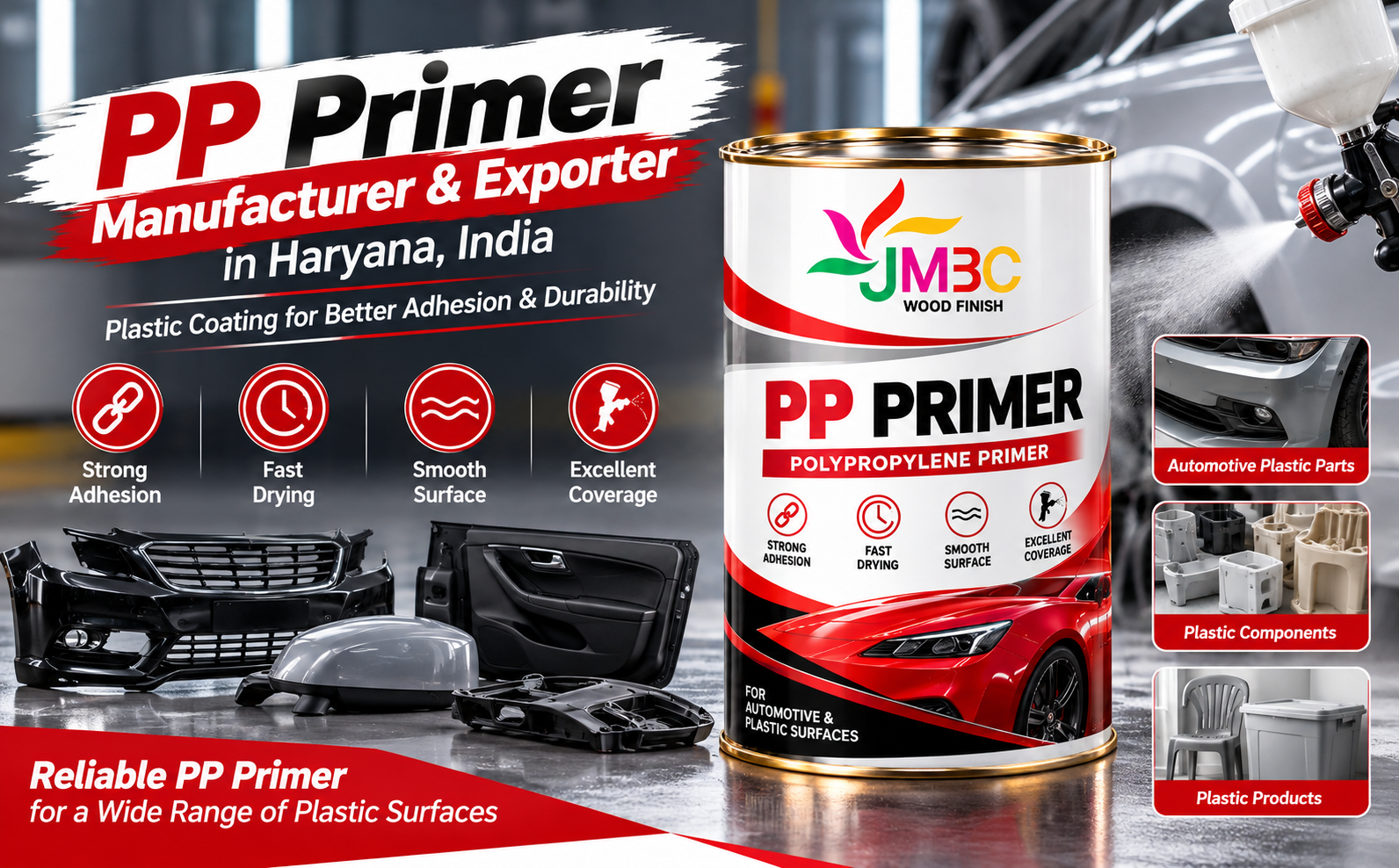
A plastic component can look ready for painting yet still provide a poor foundation for the coating. The problem may become visible only when paint lifts during handling, assembly or use. PP primer helps address adhesion on suitable polypropylene surfaces, but selecting it requires accurate material information. Shine Wood Finish by Jai Maa Banbhori Chemicals explains how to assess the plastic, prepare it and plan the coating sequence before approaching a PP Primer Manufacturer in Haryana.
Polypropylene, commonly identified as PP, can be difficult for paint to adhere to. Its surface characteristics make coating adhesion challenging, while contamination can create additional problems.
A newly moulded part is not necessarily clean enough to paint. Mould-release residues, grease or handling contamination may interfere with the coating.
When discussing a PP Primer Manufacturer in Haryana for Plastic Parts, describe whether the problem occurs on new components or previously painted items. Peeling from bare plastic and separation between paint layers require different investigations; adding primer alone may not solve both.
PP primer generally serves as an adhesion-promoting layer between a compatible plastic substrate and subsequent coatings. Its main purpose differs from a filling primer that levels minor surface imperfections.
It should not be expected to hide scratches, repair cracks or provide the finished colour. Those needs require the appropriate repair and coating stages.
Technical instructions vary: some adhesion promoters require a primer or sealer before topcoating, while others permit different coating sequences. Confirm the complete system rather than assuming paint can be applied directly over every PP primer.
Check the material marking on the component or obtain its specification from the moulding supplier. A bumper cover, appliance housing and decorative trim may use different plastics despite looking similar.
Modified PP, filled grades and mixed-material assemblies need product-specific confirmation. Also establish whether the part is bare, factory-primed or previously painted.
A PP Primer Manufacturer in India should receive this information before recommending a product. Buyers seeking a PP Primer Manufacturer in India for Polypropylene Coating should arrange a representative trial, particularly when changing resin grades or production suppliers.
Agree on a preparation procedure suited to both the plastic and coating system. An unsuitable cleaner may affect the component, so avoid using a general solvent without approval.
Preparation should address:
Do not introduce flame treatment or other surface-treatment methods without a controlled, approved procedure. Follow the Safety Data Sheet for handling, ventilation and protective equipment.
Use the specified application method and film thickness. Extra primer does not automatically create stronger adhesion, and a clear film should not be built up merely to make it visible.
Follow the stated waiting period before the next coating and any maximum recoating interval. Confirm compatible undercoats, topcoats and drying conditions.
Workshops speaking with a PP Primer Exporter in Haryana should share the complete coating sequence, including any oven temperatures. The plastic component must also tolerate the proposed process; coating instructions alone do not establish its heat resistance.
Start with the plastic grade, part size, production quantity and required finish. Ask for coverage information at the specified application thickness, then account for practical application losses.
Buyers comparing a PP Primer Exporter in India for Plastic Components should evaluate an approved trial alongside product documentation. Record preparation, coating conditions and adhesion results so repeat orders have a clear reference.
An enquiry to a PP Primer Exporter in India should include destination, pack requirements and storage conditions. Request verified product specifications and supply details from Shine Wood Finish by Jai Maa Banbhori Chemicals before purchasing.
No. Requirements depend on the plastic, existing surface treatment and coating system. Confirm suitability rather than applying it universally.
Follow the product’s instructions for an exceeded recoating interval. Do not simply add paint or another primer layer without checking.
Use an agreed test method on a representative, fully cured sample. Ask the coating supplier to define the method and acceptance criteria; an informal tape pull alone may be insufficient.