


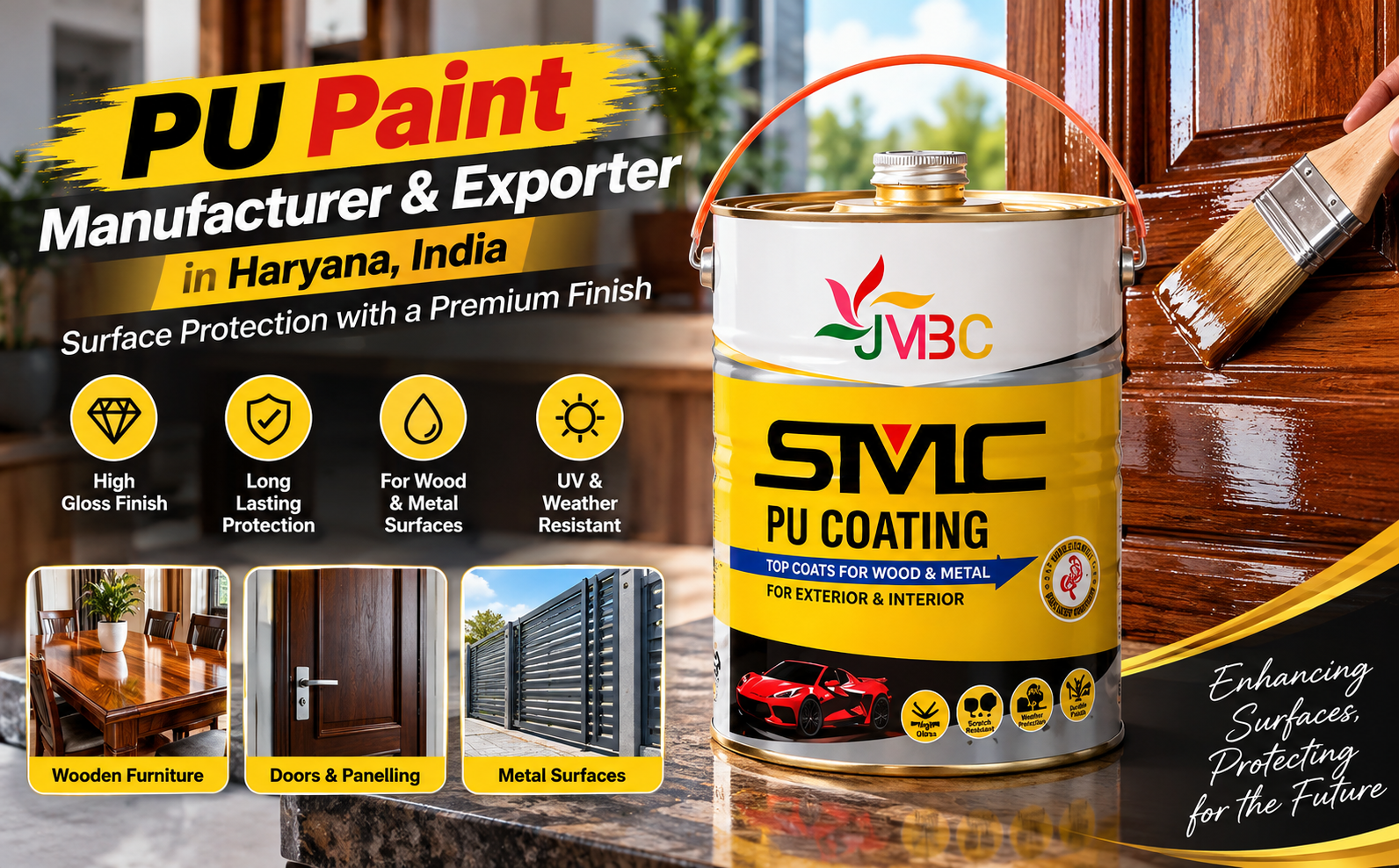
A protective coating should be chosen around what a surface faces during use. Frequent cleaning, rubbing, sunlight and occasional spills create different demands, so the same paint will not suit every project. PU paint offers several coating options, each with specific applications and limitations. This guide from Shine Wood Finish by Jai Maa Banbhori Chemicals helps readers understand those differences before contacting a PU Paint Manufacturer in Haryana, with practical information on selection, application and purchase planning.
PU paint is based on polyurethane technology. Depending on its formulation, it can provide a decorative finish alongside protection suitable for specified service conditions.
Furniture panels, wooden doors, machine covers and metal structures are examples where an appropriate PU system may be considered. Floors require products specifically designed for their traffic and exposure.
When discussing requirements with a PU Paint Manufacturer in Haryana for Wood and Metal, identify each material separately. A furniture coating should not be assumed suitable for steel equipment, even when both products carry the PU name.
Suitable PU coatings can offer resistance to abrasion, moisture or particular chemicals, but performance depends on the product and complete system.
For example, a cabinet cleaned with a damp cloth has different requirements from equipment exposed to cleaning chemicals. Describe the substance, frequency and duration of contact rather than asking for “chemical-proof” paint.
Protection also has limits. A coating is not automatically scratch-proof, suitable for immersion or capable of stopping an existing leak. Ask for relevant performance information and cleaning guidance for the intended application.
First, establish whether the job is indoors or outdoors. Exterior surfaces need a formulation approved for weather exposure; sunlight stability cannot be assumed across all PU products.
Next, clarify the product type:
Buyers approaching a PU Paint Manufacturer in India for Two-Pack Coatings should confirm compatible components and pot life. Also approve the colour and sheen through a sample. Gloss describes appearance; it does not establish protective performance.
Check the substrate for contamination, moisture, corrosion and loose coating. The required preparation depends on the material and proposed system.
Wood may need suitable filling, sanding and sealing. Metal may require corrosion removal and a compatible primer. Existing finishes need assessment before recoating.
Ask a PU Paint Manufacturer in India for written instructions covering preparation, mixing, application thickness and recoating intervals. Avoid adding extra hardener or applying unusually thick coats to increase protection.
Follow the Safety Data Sheet. Some PU products contain isocyanates, requiring specific exposure controls, particularly during spraying.
Measure the actual area being coated, including edges and additional faces. Then use the product’s stated coverage at the specified thickness to estimate material requirements.
Practical consumption can differ because of surface texture, application losses and the number of coats. Confirm whether coverage figures refer to mixed material and whether separate supporting components are required.
For overseas quantity planning, discuss pack combinations with a PU Paint Exporter in Haryana. Include primer, hardener and other specified materials in the budget. Comparing only the topcoat price can leave essential costs unaccounted for.
A useful supplier discussion should produce a clear recommendation supported by technical information. Request a representative sample, product identification, storage conditions and stated shelf life.
When contacting a PU Paint Exporter in India, provide the destination, intended use and quantities. Confirm packaging, shipment documentation and written delivery terms for the actual formulation.
Share these details with Shine Wood Finish by Jai Maa Banbhori Chemicals and request verified specifications. Avoid relying on general claims such as “suitable for every surface” when making a purchase decision.
Yes. They use different resin technologies. Their suitability depends on the formulation and exposure; some specified systems combine an epoxy primer with a PU topcoat.
Only when the product instructions permit it. Application methods affect appearance and film thickness, so confirm the recommended equipment.
Possibly, after checking its condition and compatibility. Cleaning, abrasion or other preparation may be required according to the recoating specification.